
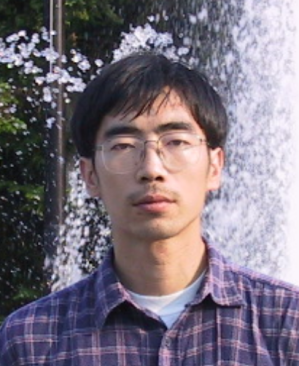
Yingjie Liu
Professor, Georgia Institute of Technology
Time
June 16, 2025 at 10:30
Venue
Conf. Room, 6F, Building 2, EIT
Title
Neural Networks with Local Converging Inputs (NNLCI) for Solving PDEs: A General Approach with Orders-of-Magnitude Complexity Reduction and Minimal Training Data Requirements
Abstract
This talk is based on a series of joint works with Zhen Chao, Harris Cobb, Haoxiang Huang, Weiming Ding, Hwi Lee, Tzu Jung Lee, Dexuan Xie, and Vigor Yang. We have developed a neural network approach capable of accurately predicting both shock interactions and smooth regions of solutions to the Euler equations in 1D and 2D. For example, to predict the solution of the 1D Euler equations at a specific space-time location, the output of a neural network can be designed to provide the solution value at that location. However, if the input consists solely of a low-cost numerical solution patch within a local domain of dependence, the neural network lacks the ability to distinguish between inputs spanning a shock and those within a smooth region. Our approach leverages two numerical solutions from a converging sequence—computed using low-cost numerical schemes within the local domain of dependence of a given space-time location. These serve as the input for the neural network to generate high-fidelity solution at the location. Despite the smeared nature of input solutions, the resulting output provides sharp approximations for solutions containing shocks and contact discontinuities. This method dramatically reduces computational complexity compared to fine-grid numerical simulations, achieving at least a two-order-of-magnitude reduction in 2D, with potential for even greater savings in higher dimensions due to its localized methodology. Moreover, the training data requirement remains minimal, as a single fine-grid simulation can generate hundreds or thousands of local samples for training. The method sustains strong generalization even when confronted with complex and pronounced singularities in the solutions. Beyond its efficiency, this approach naturally extends to complex domain
Speaker
Yingjie Liu earned his Bachelor's and Master's degrees in Computational Mathematics from Peking University in 1987 and 1990, respectively, and obtained his Ph.D. in Applied Mathematics from the University of Chicago in 1999. He was a postdoctoral researcher in the Department of Applied Mathematics and Statistics at SUNY Stony Brook from 1999 to 2002. Since 2002, he has served as a professor—progressing from assistant to associate to full—in the School of Mathematics at the Georgia Institute of Technology. His research focuses on the development and analysis of numerical methods for solving differential equations, particularly partial differential equations. He has developed or co-developed several innovative numerical methods, some of which are widely used in both industry and academia.
Host
Jie Shen
Chair Professor
Dean, School of Mathematical Sciences
Chair Professor
Dean, School of Mathematical Sciences